*************************************
Kutoka CNN.com
Get ready for an Africa Boom
By Charles Robertson, Special to CNN
Editor’s note: Charles Robertson global chief economist for Renaissance Capital and lead author of ‘The Fastest Billion: The Story Behind Africa’s Economic Revolution.’ The views expressed are his own.
The rise of Africa’s long forlorn economies – what we at Renaissance Capital have dubbed “The Fastest Billion” – represents the final phase of a global economic transformation that began over 200 years ago as agrarian societies saddled with absolute rulers began their journey through industrialization into the pluralistic middle-class societies increasingly driven by the information age we know today.
For many reasons, Africa largely missed out on this journey. But no longer: while the process will not be complete by 2050, a changing set of global and local realities suggest that Africa is set to be the final beneficiary of this revolution.
Over the past decade, the billion people who live in Africa have experienced the fastest growth the continent has ever seen, and many of its countries (Nigeria, Ethiopia, Mozambique, Guinea) are among the fastest growing in the world. A growing body of evidence backs our view that as Africa’s population doubles to two billion over the next several decades, its GDP will increase from $2 trillion today to $29 trillion in today’s money by 2050.
To many in the West, such figures beggar belief – just as similar projections for East Asia’s Tiger economies or Latin America’s star performers did in the 1980s. The idea that Americans and Europeans would drive around in South Korean automobiles, or fly around in Brazilian-made jetliners, would have brought great guffaws from experts of 1980. But today, Hyundai, Kia and Embrear are household names. Things change quickly when certain tipping points are reached. We believe Africa has reached such a point.
More from GPS: How Africa could feed the world
By 2050, assuming a conservative trajectory similar to what India achieved since 1990, Africa will produce more GDP than the United States and eurozone combined do today, and its basic social, demographic and political realities will also be transformed. The necessary elements that have propelled countries from late medieval commerce with authoritarian government through to industrialized nations with comprehensive and far-reaching social and legal institutions are well known.
A continent rich in natural resources – mineral, agricultural and in energy – Africa is also rich in the youth of its population, enjoying a demographic advantage over all other regions of the world.
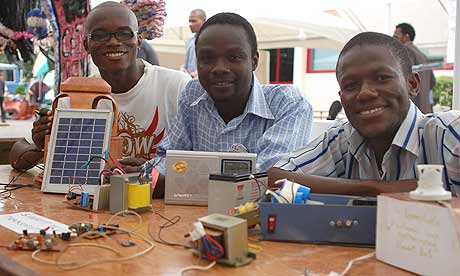
The pace of technological innovation globally is now so rapid, and technology is so easy to transfer – as evidenced by the boom in mobile phone technology and the roll-out of broadband across the continent – these young Africans are not only the recipients of technology, but via M-PESA banking, are becoming exporters of it, too.
Today, Africa has the greatest room to boom on the back of two centuries of global progress. The take-off in Africa began around the turn of the century, 40 years after independence. Why not earlier? Because human capital was extremely constrained by a lack of primary and secondary education, while global capital could find better opportunities in East Asia and Latin America. Political leaders in the 1960s and 1970s were inexperienced, often self-serving and were offered contradictory advice on how best to develop a country. There were no strong Asian role models to emulate. International involvement in Africa was too often geared towards Cold War geopolitics, feeding civil wars and strife, rather than trade and investment.
What has changed? Many governments have learnt from their mistakes and seen the positive reform examples not just in Asia, but more importantly in Africa itself, from Mauritius to Botswana and Cape Verde, and now Ghana to Rwanda. In most countries there has been no single reform miracle, like China’s in 1978 or India’s in 1991, but rather a series of small steps which taken together have been just as powerful.
Stronger growth and good public finances – Africa’s numbers are far better in this regard than those of Europe, the United States or Japan – have helped draw in record levels of foreign private-sector capital. But the improvement shows across the board – in primary and secondary education, in health, personal security, transparency and governance.
The headlines of the day may not support this – war rages in parts of Congo and Sudan, poverty and corruption stain too many of the continent’s peoples. Such are the stuff of headlines. But today we count around 30 democracies across the continent, some strong and immortal, but many fragile and still vulnerable. That number will grow.
Today the continent is reaping the benefits of high commodity prices and exports to China to begin the process of infrastructure investment that accelerates growth. Each year, in the oil sector alone, a major new discovery is heralded, from Ghana to Uganda and most recently Kenya, pushing Africa’s share of world oil reserves to 10 percent. African oil production growth has already been the fastest in the world over the past 10 years, all of it in sub-Saharan Africa (SSA). Africa now produces 10m barrels a day, as much as Russia or Saudi Arabia, with the 6m barrels of SSA alone worth $235 billion of oil revenue annually or 20% of 2011 GDP. Renaissance expects volume increases to ensure this tops $300 billion even with no change in oil prices by 2019.
Nearly a trillion dollars of oil revenue every three years means unprecedented inflows of foreign exchange to fund imports of investment and consumption goods. Rapid economic growth means growing African demand for resources. Do not be surprised if Nigerian steel consumption rises from 1.6 million tons annually today to 115 million tons annually by 2050. African motor vehicle sales of 8 million by 2020 may reach 14 million by 2030, higher than the U.S. today. Who knows – someday you may find yourself driving a Nigerian auto and dialing hands free on a Tanzanian-made phone. It has all happened before.